
Texas Criminal History Checks
Start by naming the record and the place that created it. The Texas DPS public Criminal History Search is built for reported convictions and deferred adjudications that may be released under state law. It is not a live Texas court docket, jail roster, warrant index, or complete fingerprint rap sheet. A known Texas felony case points to a district clerk. A Class A or B misdemeanor usually points to a county clerk, while fine-only cases may remain with a municipal or justice court. Recent booking information comes from the county jail.
Use full legal names, a complete birth date when known, and any middle or maiden name. Texas name matches are candidates, not positive identity. Texas DPS says fingerprints provide the positive link. Save the criteria and matching method along with any result, then compare the disposition with the originating court. For self-review, use the fingerprint channel. For a local narrative, send the request to the arresting agency.
- Choose Texas DPS for public statewide conviction and deferred-adjudication data.
- Enter full names and the best available birth-date details.
- Identify the county and court for the original case file.
- Compare identity, charge, disposition, and reporting dates.
- Use fingerprint personal review or certified court proof when needed.
Why Texas Records Can Disagree
A Texas arrest begins a chain of separate records. The arresting agency creates the incident and arrest reports. A local booking facility records custody, charge, bond, and release data. For a reportable Texas arrest, fingerprints and an arrest segment move to Texas DPS. Texas prosecutors and clerks later send charging and disposition segments, using a tracking incident number and suffix to attach each action to the correct arrest cycle.
That chain can break. A late clerk report, rejected transaction, identity variant, or mismatched tracking number can leave the county judgment and Texas DPS entry out of step. The January 2026 Texas DPS compliance report measured adult disposition completeness at 73 percent for the 2024 charges already reported to CCH. That percentage does not mean 73 percent of all Texas arrests. It measures whether a reported charge had a linked disposition.
The Texas DPS reports library shows the statewide reporting context.
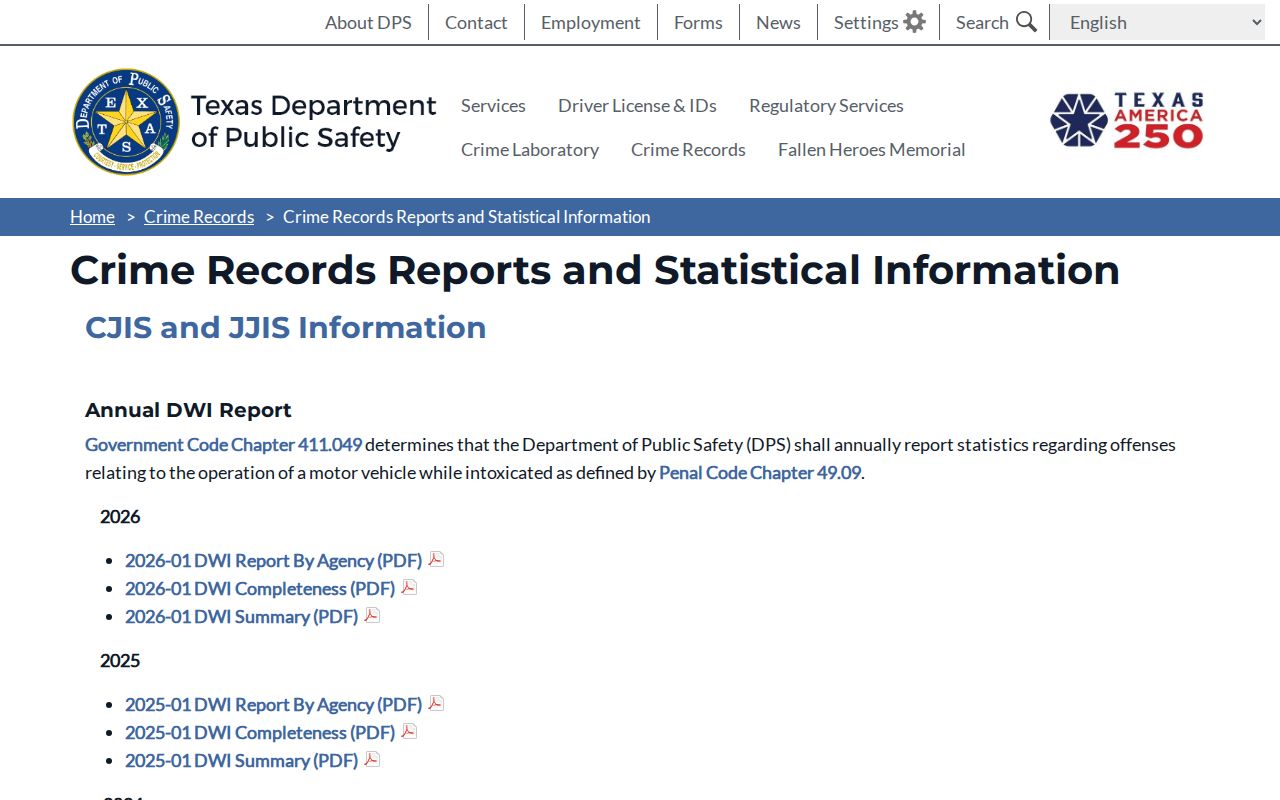
Those reports help explain why a county search remains essential even when a Texas DPS result exists.
Record flow: Arrest and fingerprints → Texas DPS arrest segment → prosecutor action → county court disposition → updated CCH record.
The Criminal History Repository in Texas
The Texas Department of Public Safety Crime Records Division maintains the central Texas Computerized Criminal History system. It receives identity, arrest, prosecutor, court, and custody segments from Texas criminal justice agencies. Texas Code of Criminal Procedure Chapter 66 supplies the reporting framework. For many covered arrests, the fingerprint-supported arrest record is due within seven days. Later participants generally must report within 30 days after receiving the information.
Public access is narrower than the repository itself. Government Code Section 411.135 authorizes release of reported convictions and deferred adjudications through the public name-search product. Other nonpublic data can remain in CCH for justice or other specifically authorized access. A fuller review of one's own Texas file uses fingerprints rather than the public name portal. The specialized Texas DPS criminal history checks resource separates these products and their correction routes.
A public result also differs from a Texas county case file. It normally does not supply the full docket, filed motions, police narrative, bond history, or every nonconviction outcome. Those Texas records stay with their original custodians.
Note: A Texas DPS name match is a lead, while fingerprints and the originating county file provide stronger identity and disposition proof.
Texas DPS Search and FAST
Texas offers three useful official state channels. The online Texas name search requires a public account and prepaid credits. Form CR-42 supports a mailed public name request. Texas FAST, delivered through IdentoGO, provides fingerprint capture for a person's own Texas record review. The last route is strongest for identity because the prints connect the request to the Texas DPS file rather than to name similarities.
| Portal Field | Required | Search Use |
|---|---|---|
| Last name | Yes | Use the full legal spelling |
| First name | Yes | Avoid initials and nicknames |
| Middle or maiden name | No | Improves candidate matching |
| Complete birth date | No | Narrows common-name results |
| Partial birth date | No | Month, day, or year may be used |
The initial online query costs one $1 credit, even when it returns no match. The current card charge adds 2.25 percent per credit plus $0.25 per order. A CR-42 mailed search is $10 per name. The researched CR-63 personal-review total is $25, split between fingerprint capture and Texas DPS processing, though the live scheduler controls if vendor pricing changes.
| Official Channel | Base Amount | Best Use |
|---|---|---|
| Texas DPS public portal | $1 initial credit | Public conviction and deferred data |
| CR-42 mail request | $10 per name | Mailed public result or certified copy |
| FAST personal review | $25 researched total | Fingerprint-linked self-review |
| FBI identity summary | $18 plus capture | National self-review |
The official IdentoGO enrollment service begins the FAST appointment process. Its service-code route reinforces the need to choose the channel that matches the record sought.
Record Systems Across Texas
Texas does not place every criminal record in one database. Texas DPS compiles qualifying criminal history. TDCJ reports current Texas state-prison custody. Texas DPS also publishes the Texas statewide sex offender registry. Criminal trial cases remain with local clerks because the public re:SearchTX repository excludes criminal case records. Warrants and police reports also require the Texas agency or court that holds them.
| System | What It Holds | Run By |
|---|---|---|
| Texas DPS Criminal History Search | Public reported convictions and deferred adjudications | Texas DPS |
| TDCJ Online Inmate Search | Current sentenced state custody | TDCJ |
| Texas Public Sex Offender Registry | Qualifying statewide public registration data | Texas DPS |
| Local criminal clerk systems | Criminal dockets, filings, orders, and judgments | Texas courts and clerks |
| Local sheriff and jail systems | Warrants, bookings, bond, housing, and release | County agencies |
Each system answers a different question. A no-match in one does not prove that no record exists elsewhere.
Texas Jail and Prison Records
Texas county jail and TDCJ prison records are not interchangeable. County jails chiefly hold people awaiting Texas court action, transfer, or release, along with some local sentences. TDCJ holds people transferred after qualifying state judgments. Federal custody forms a third track through the Bureau of Prisons or U.S. Marshals Service. A new county booking is unlikely to appear in the TDCJ locator.
The free TDCJ Online Inmate Search accepts a last name with at least a first initial, a TDCJ number, or a SID number. Results can show current facility, sentence dates, projected release, parole eligibility, and offense rows. They generally do not provide the bond, current county court date, arresting agency, or booking photo found in a local jail entry.
The TDCJ FY2025 Annual Review reports 104 facilities across six regions.
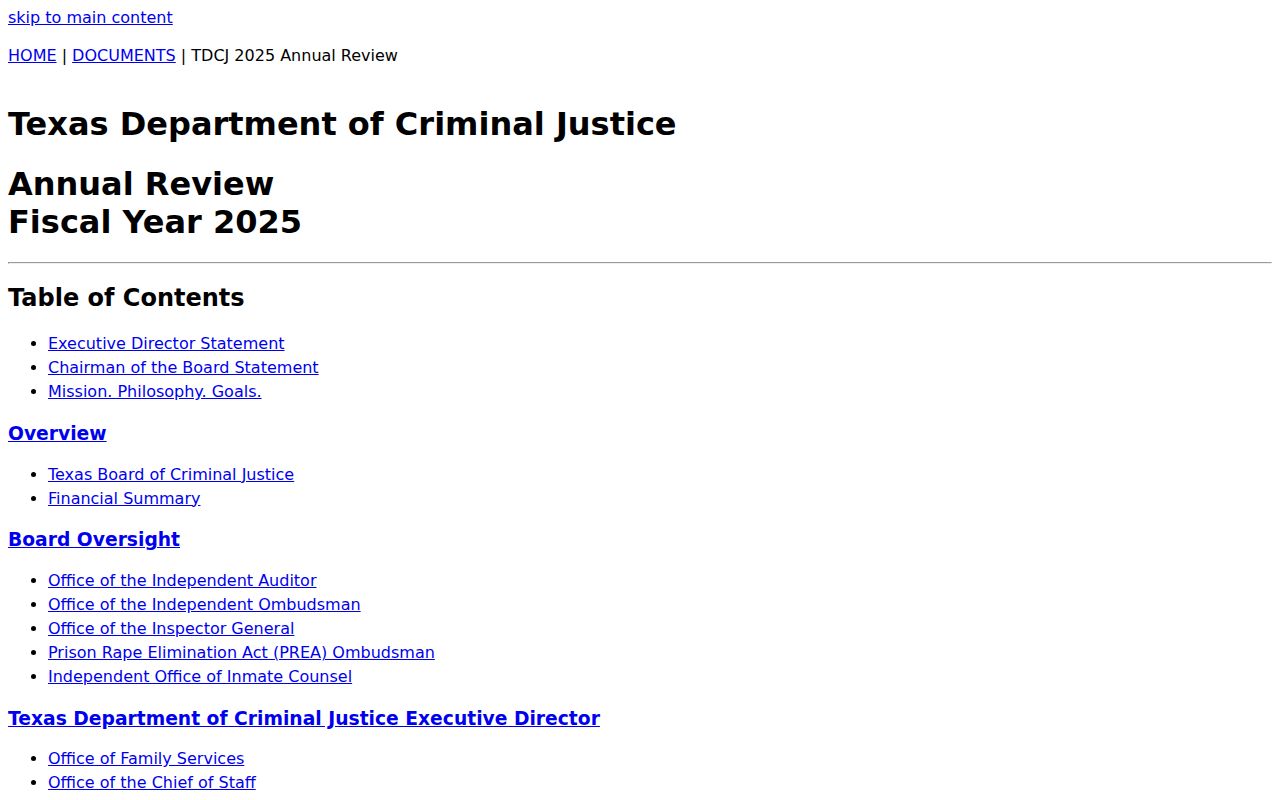
Its 2025 statistical total of 138,901 people in prison, state jail, or substance-abuse felony punishment custody shows the scale of the separate state system.
Custody alerts can also cross systems. Integrated Victim Services System covers TDCJ custody and parole information. IVSS Counties began integrating participating county jail and court information in 2025, but participation should not be assumed for all counties.
Note: A county jail search and the TDCJ locator cover different custody stages, so a no-hit in one does not settle the other.
Texas Criminal Record Types
Texas criminal records are grouped by who creates them. An arresting agency writes the incident and arrest reports. A county jail creates booking and custody fields. Prosecutors and clerks produce charging papers, dockets, and final judgments. Texas DPS links submitted segments into a statewide history. TDCJ and local supervision agencies then maintain operational custody or supervision status.
- Arrest and booking records: show an allegation and custody event, not guilt.
- Court case files: show charges, settings, filings, disposition, and sentence.
- Texas DPS history entries: compile reported arrest and outcome segments allowed in the selected product.
- Warrants: arise from courts and are executed through law enforcement systems.
- Custody and supervision records: track jail, prison, community supervision, or parole status.
- Registry records: publish qualifying Chapter 62 registration information.
Juvenile, victim, sensitive identity, sealed, and expunged material may be restricted. The absence of public access should not be read as proof that no protected record exists.
Texas Warrants and Police Reports
Texas has no complete public statewide active-warrant search. Restricted Texas justice networks carry warrant and wanted-person information, but the Texas DPS conviction portal does not expose that file. Check the district or county clerk for case events, the sheriff's official warrant channel, and the proper municipal or justice court for fine-only matters. A possible Texas warrant should be addressed through the issuing court or counsel. Payment to an unrelated service is not proof of clearance.
Police and incident reports follow a similar custodian rule. Request the report from the sheriff, police department, campus agency, Texas DPS unit, or other office that created it. State the event, approximate date, location, and report number if known. Active-investigation material, juvenile information, victim details, and protected identifiers may be withheld or redacted under Texas law.
Crash reports use a distinct path. The Texas CRIS purchase system provides the official ordering interface for eligible crash records.
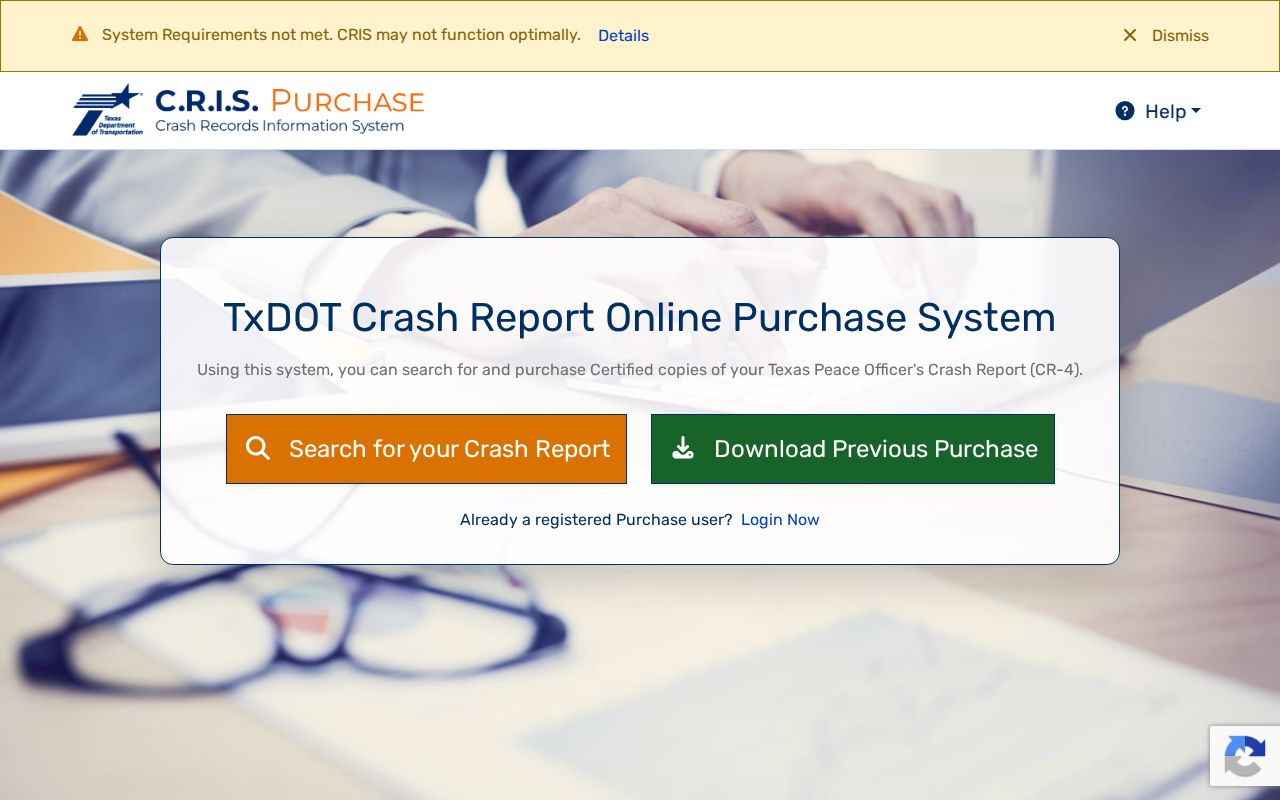
CRIS illustrates why a CCH query cannot replace the dedicated system that holds a different report type.
Note: Confirm a warrant with the issuing court because local databases may update at different times.
Texas Supervision and Parole
Texas calls adult probation community supervision. It is locally operated and Texas state overseen. Texas judicial districts establish 122 Community Supervision and Corrections Departments. The TDCJ Community Justice Assistance Division funds, regulates, audits, and assists those departments. A supervision order and case judgment stay with the court, while the local CSCD maintains the day-to-day status.
Parole is different. The Texas Board of Pardons and Paroles decides release and revocation matters. The TDCJ Parole Division supervises people released on parole or mandatory supervision. A court sentence, Board decision, and current supervision record may therefore sit in three distinct places. Ask the office that owns the fact instead of treating one search result as the whole record.
The Texas Board of Pardons and Paroles publishes its statewide review resources.
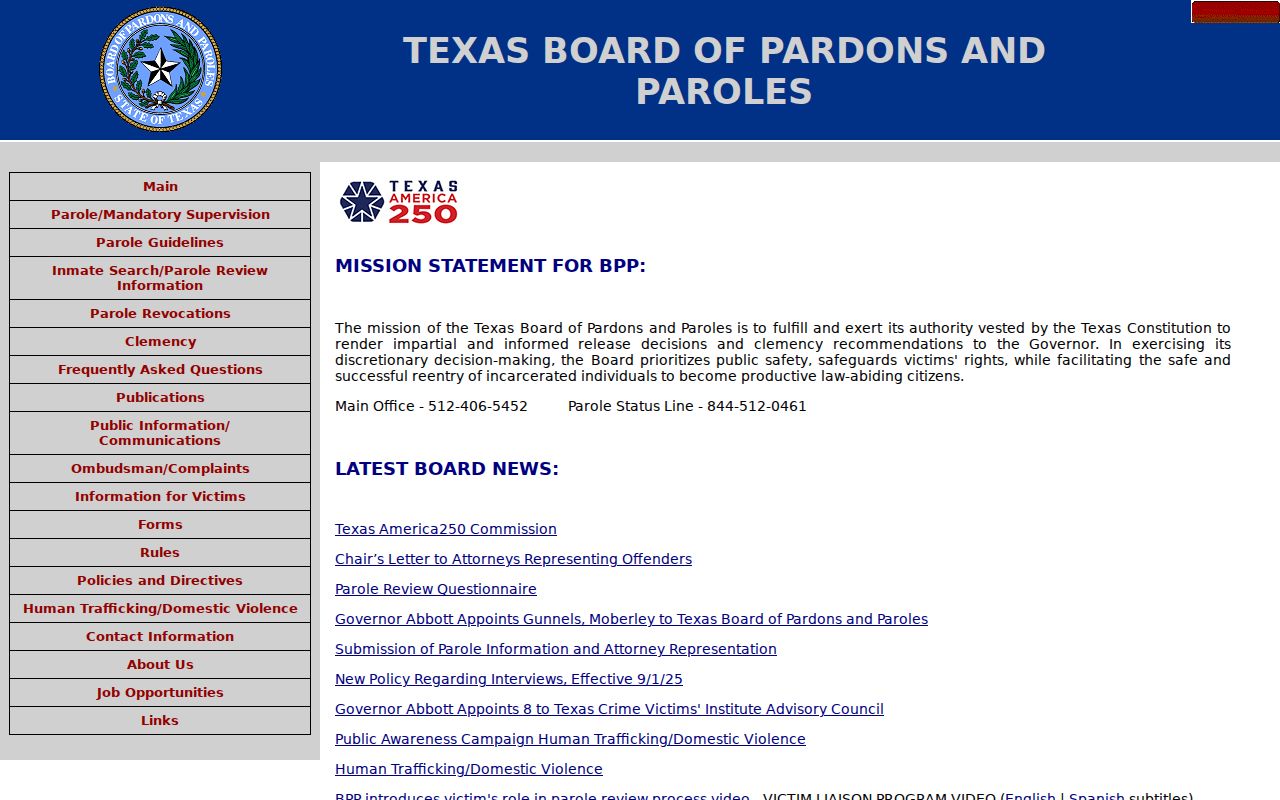
The Board's separate portal reflects the split between a criminal judgment, incarceration, and release supervision.
Note: Community supervision records stay local even though TDCJ sets standards and funds the 122 Texas CSCDs.
Texas Record Access Laws
The Texas Public Information Act gives a route to existing public records held by state and local governmental bodies. The request goes to the body that has the record, not to the Attorney General as a central archive. The agency may release the material, redact protected fields, cite an exception, or seek an Attorney General decision. Criminal court case papers use court access rules and the clerk, rather than the executive-branch PIA process.
Key Texas laws:
Government Code Chapter 552 provides public-information access and law-enforcement exceptions.
Government Code Chapter 411 controls CCH confidentiality, public Texas DPS data, and nondisclosure.
Code of Criminal Procedure Chapter 66 sets criminal-history reporting duties.
Code of Criminal Procedure Chapter 55A governs Texas expunction.
The official Texas public-information request guide shows how to direct a request.
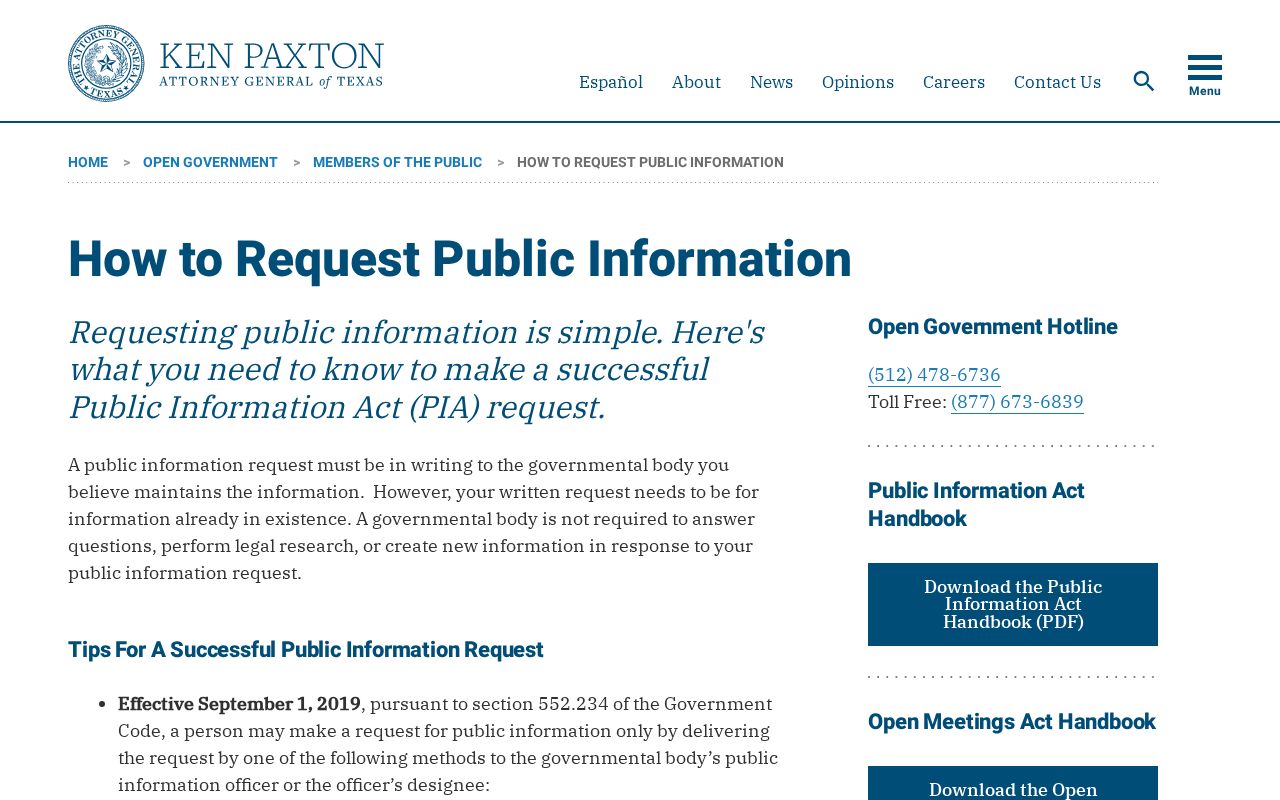
Its agency-focused process is the practical fallback when no searchable portal contains the requested record.
The full Texas Public Information Act text supplies the legal framework behind that request.
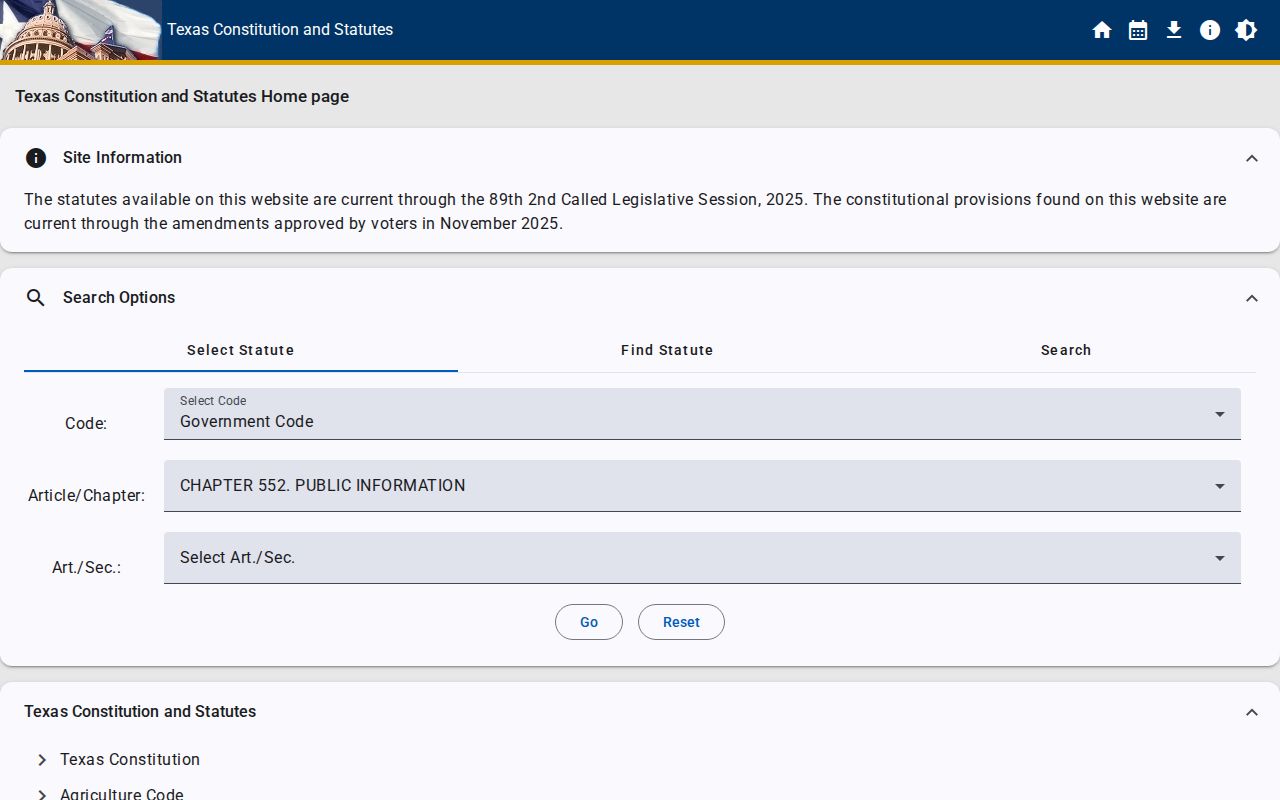
Reading the statute with the agency guidance helps distinguish public access from required redaction or withholding.
Texas Expunction and Nondisclosure
Expunction and nondisclosure are different Texas remedies. Chapter 55A expunction directs covered record holders to return, delete, destroy, or obliterate qualifying arrest records as the order requires. A nondisclosure order generally seals qualifying history from ordinary public release but preserves access for agencies and entities listed by law. Neither remedy should be assumed from a missing web result.
Chapter 55A took effect on January 1, 2025, replacing older Article 55.01 citations through a recodification. Routes include qualifying acquittal, pardon or actual innocence, mistaken identity, release without charges after statutory conditions, and some dismissals. Eligibility is fact specific. Filing generally occurs in a district court in a county authorized by the statute, so the local district clerk controls filing instructions and fees.
The Texas State Law Library relief guide explains the current distinction and routes readers to forms.

After relief is processed, check both the originating court's public access and a fingerprint-based Texas DPS personal review.
Note: Texas expunction and nondisclosure have different effects, and both depend on a court order rather than a missing online result.
Reading Texas Crime Data Carefully
Texas DPS has administered Texas Uniform Crime Reporting since 1976. Its interactive UCR and NIBRS tools can sort adult and juvenile arrests by selected year, place, age, sex, race, and ethnicity. Reporting changes and later corrections can affect trends. Every quoted number should retain its module, year, geography, age group, and retrieval date.
Crime incidents, arrests, prosecutions, and convictions are not the same measure. The 2025 Crime in Texas report gives an estimated population of 31,572,086 and detailed offense measures, but it does not publish one simple statewide arrest total. More than 1,000 agencies participate in the reporting program. A current arrest count must be generated with stated UCR query settings.
The Texas UCR interactive dashboard exposes those selectable measures.
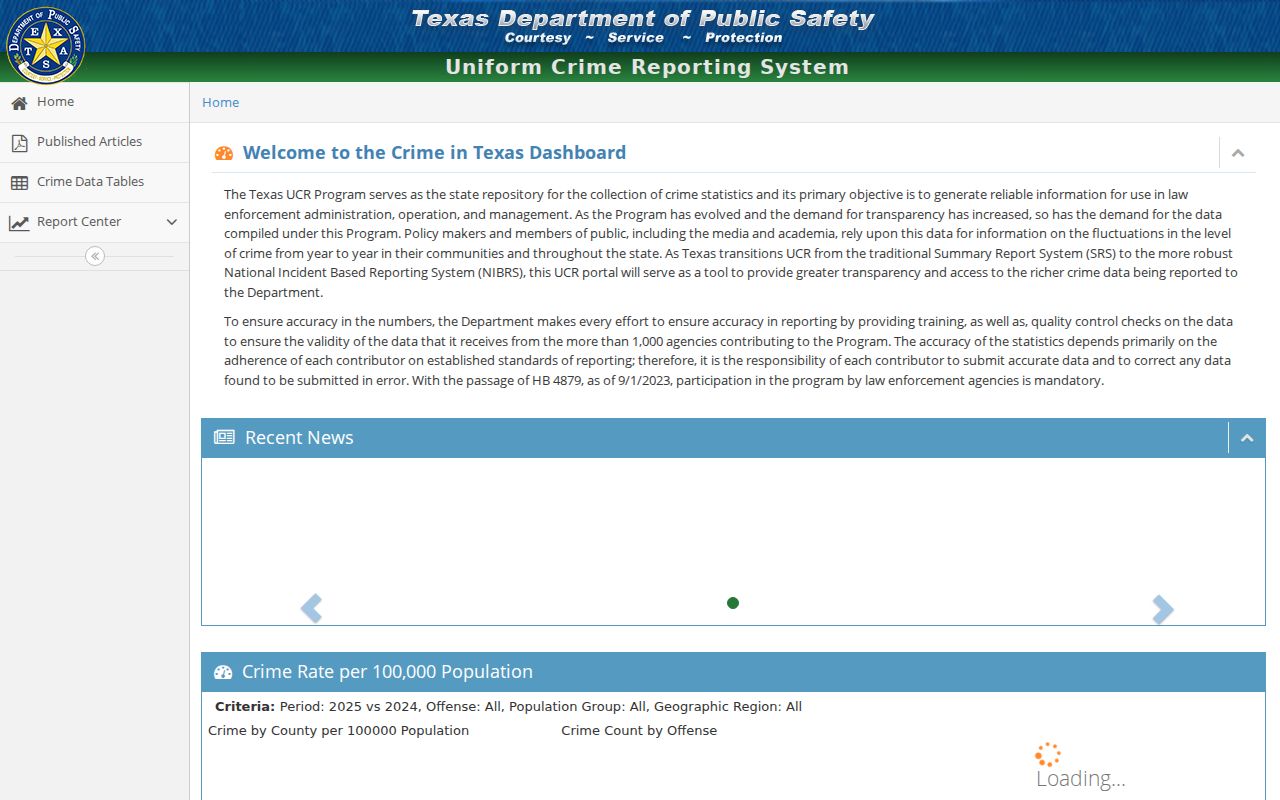
Its filters show why a number without a defined query cannot stand as a statewide arrest total.
Texas Criminal Records by County
Arrests, bookings, police narratives, and criminal case files begin with local agencies. Texas's largest metro counties each have separate district clerk, county clerk, sheriff, and municipal channels. Open the county tied to the arrest or case, then choose the custodian that created the record. Every one of Texas's 254 counties has a local criminal records site in the statewide directory.
Harris County
Houston · Texas's largest county and highest-volume metro record layer
Dallas County
Dallas · Separate high-volume court and sheriff custody channels
Tarrant County
Fort Worth · Major urban court, clerk, and jail systems
Bexar County
San Antonio · Large metro docket and county jail system
Travis County
Austin · Local courts and jail in the state-capital county
Collin County
McKinney · Fast-growing North Texas court and sheriff network
Denton County
Denton · Distinct felony, misdemeanor, and jail access paths
Fort Bend County
Richmond · Houston-area county with its own clerk and sheriff records
Browse the full directory of all 254 Texas counties to open the criminal records site for any county.
Texas Record Terms and Classes
Texas record labels show both the alleged offense level and the case outcome. District courts generally hear felonies. Constitutional county courts and county courts at law commonly hear Class A and B misdemeanors. Municipal and justice courts usually handle fine-only Class C misdemeanors. The arrest charge can change before disposition, so read the filed charge and judgment rather than relying on the booking label.
- Deferred adjudication
- The court delays a finding of guilt while community supervision is completed. It is not an ordinary conviction, but it can appear in the public Texas DPS product unless protected later.
- Disposition
- The result of a charge, such as conviction, dismissal, acquittal, or deferred adjudication.
- SID
- The state identification number used within the fingerprint-supported Texas criminal history system.
- TRN and TRS
- The tracking incident number and suffix that connect an arrest with prosecutor and court reporting.
- Expunction
- The Chapter 55A remedy that removes qualifying arrest records more fully than nondisclosure.
These terms help reconcile a Texas DPS result with the county file. A pending docket may not yet have a public Texas DPS disposition, while a dismissed case can still require a relief order before every public trace changes.